
Last updated November 21, 2026
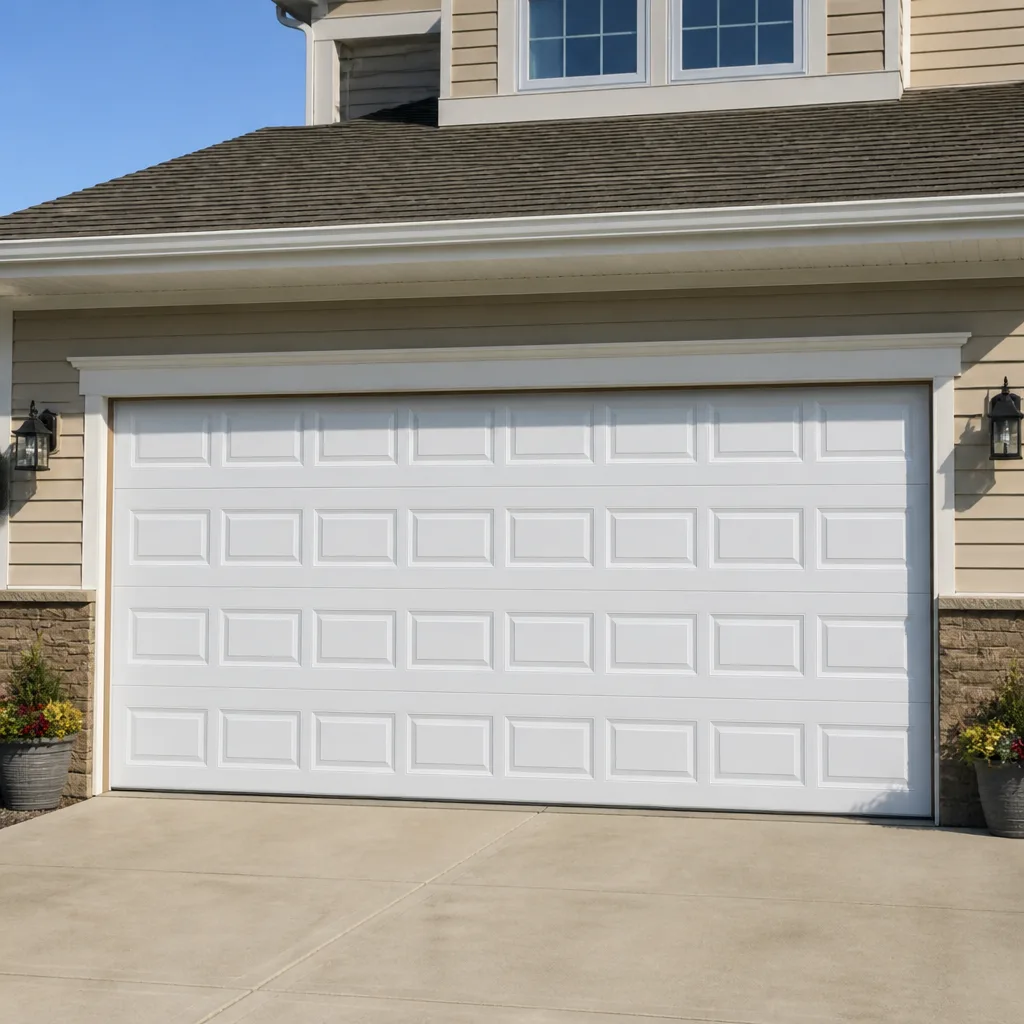 Raised-panel steel
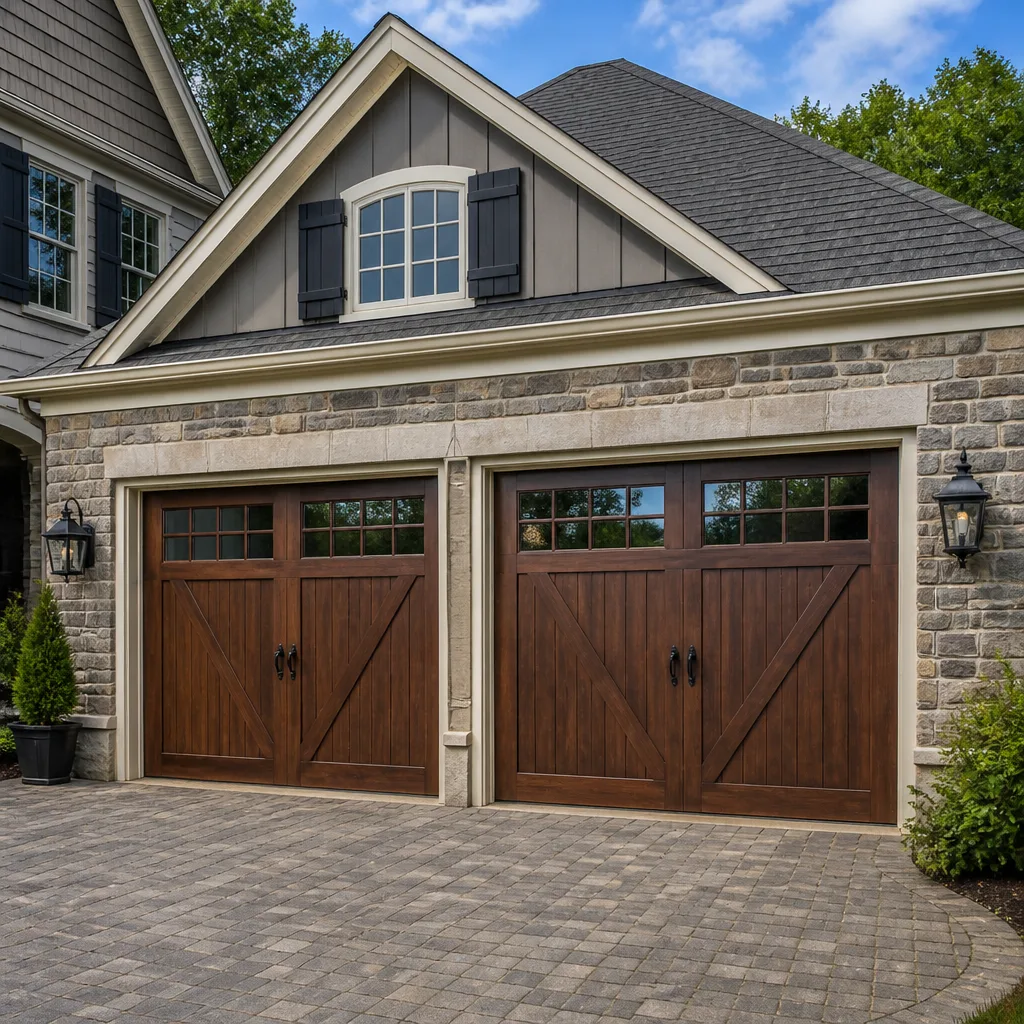 Carriage house
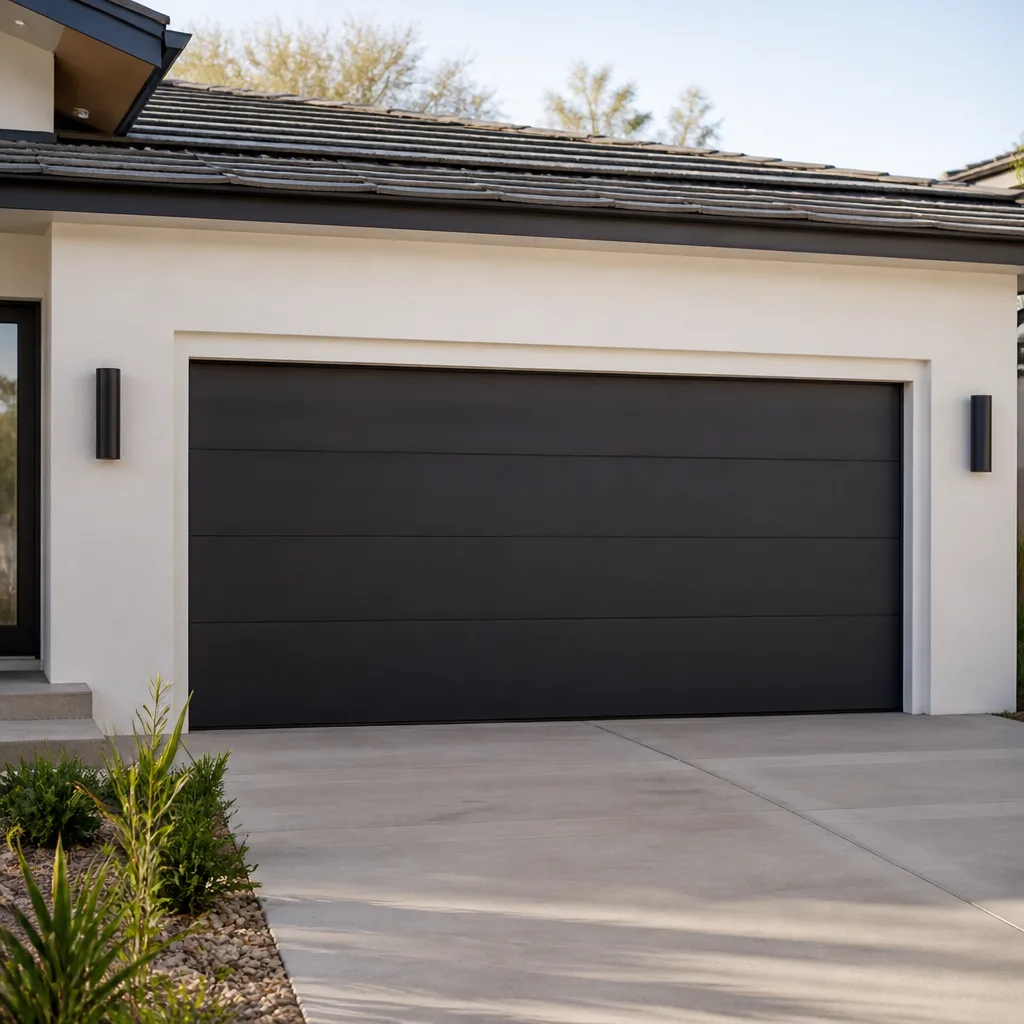 Modern flush
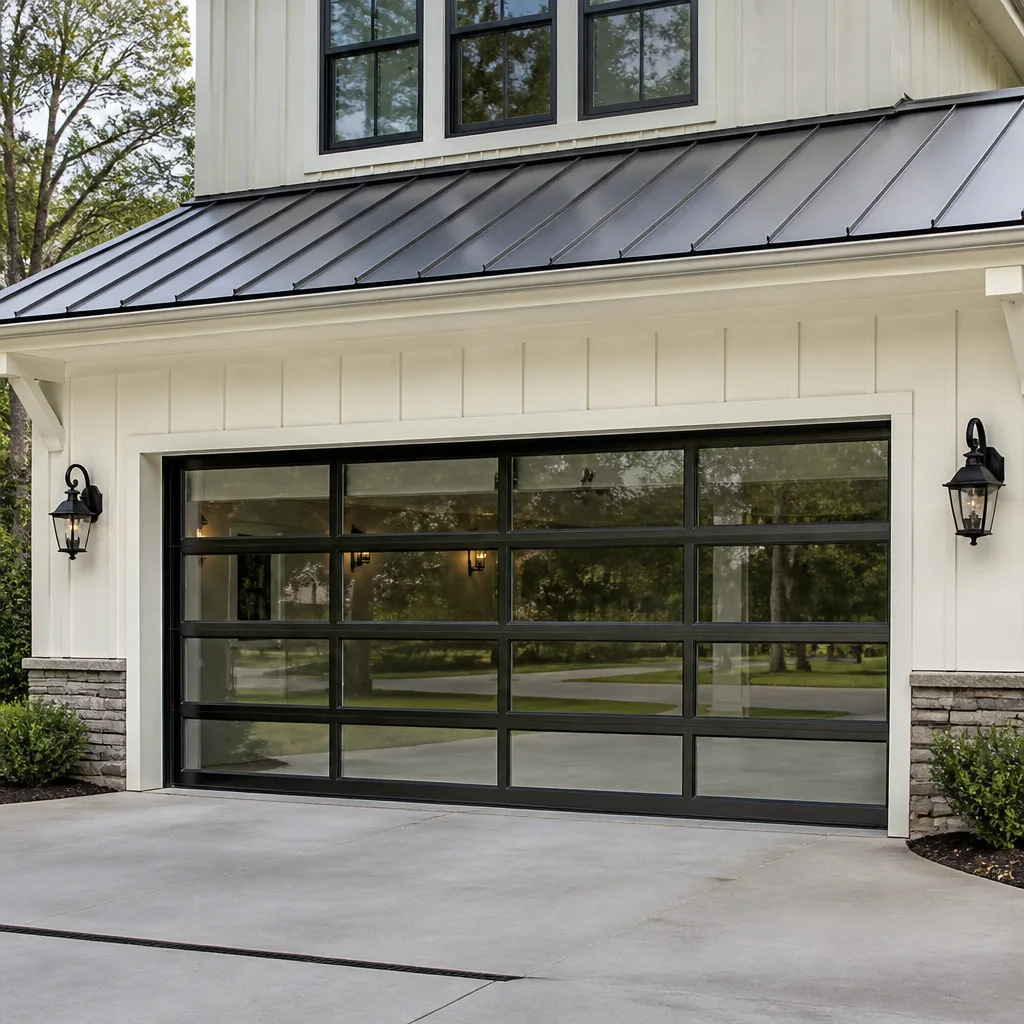 Full-view glass
 LiftMaster openers
 Chamberlain openers
Full 25-point door and opener safety check with every visit - springs, cables, rollers, tracks, and your LiftMaster or Chamberlain opener included
You get a price before we start. It does not change when the pro arrives.
Get your free estimateGarage Door Warning Signs: An Akron Homeowner’s Reference Guide
A door that won’t open at all isn’t a warning sign. It’s a failure, and by then the useful window to catch the problem has already closed. The signals that actually matter arrive weeks or months earlier: a door that drifts a few inches when you let go halfway up, a grinding note that shows up at the same point in every cycle, rust freckles along a torsion spring coil. A torsion spring under full tension holds roughly 100 foot-pounds of torque, and by the time it snaps, it has usually been telegraphing fatigue through drift, cycle noise, or balance asymmetry for a long stretch. Most Akron homeowners walk past those signals every morning without knowing what they’re reading. This guide is the translation key.
Quick Answer
The warning signs of a failing garage door in Akron are a door that won’t hold its position on a manual balance test, noise that changes between one part of the cycle and another (grinding, squealing, banging, or rattling each point to a different component), rust or coil gaps on the torsion spring, and an opener that hesitates, reverses without an obstruction, or responds to the remote slower than it used to. Any one of these is worth a professional look before it becomes a door you can’t move by hand or an opener that needs a full replacement.
Styles & brands we work with
- Raised-panel steel
- Carriage house
- Modern flush
- Full-view glass
- LiftMaster openers
- Chamberlain openers
Table of Contents
- The Manual Balance Test: What Uneven Drift Actually Means
- The Noise Taxonomy: Four Sounds, Four Different Problems
- Visual Warning Signs on Torsion Springs
- Opener Behavior Changes That Signal Electrical or Logic Board Trouble
- How Akron Winters Accelerate the Warning Signs
- Why Spring and Cable Problems Are Never a Do-It-Yourself Job
- The Short Maintenance List That Keeps Warning Signs From Becoming Failures
- What a Trained Technician Reads That You Probably Walk Past
The Manual Balance Test: What Uneven Drift Actually Means
The single most useful diagnostic you can run on your own garage door takes about a minute and requires no tools. It tells you whether the door’s lifting system is still carrying the door’s weight, or whether the opener has quietly been doing that work for months. In our experience, this is the test that catches spring fatigue long before the spring actually breaks.
Here’s how it goes:
- Close the door completely and disconnect the opener using the release cord or handle (this is the only move you’ll make while the door is under load, so keep your hands clear of the hinges and the spring shaft).
- Lift the door by hand to roughly waist height and stop.
- Let go. Watch what happens. A healthy torsion-spring system holds the door in place, more or less.
- Repeat at a second height, about shoulder level. The door should behave the same way both times.
What uneven drift means depends on the pattern. A door that slides down on its own at both heights, slowly at first and then picking up speed, is telling you the springs have lost tension and the door’s full weight is now the opener’s job. A door that drops at one height but holds at another usually points to a binding point in the track or a single unbalanced spring on a two-spring setup. On a two-spring system, both springs should look identical and read identical on this test. When only one has fatigued, the door will feel lopsided, and it will wear the track, rollers, and hinges unevenly until the imbalance is corrected.
The test comes with a hard stop. Do not try to adjust, wind, or unwind a torsion spring yourself to fix what the test reveals. Torsion springs hold enormous stored energy, and the winding cones that tension them can release that energy instantly if a winding bar slips. The adjustment looks mechanical and simple from the outside; it isn’t. What the test should do is tell you whether to schedule garage door spring repair before the spring fails on its own schedule. A door that drops more than a few inches before you catch it is already past the “watch and wait” stage.
The Noise Taxonomy: Four Sounds, Four Different Problems
Garage door noise is not background soundtrack. Each sound a door makes has a mechanical source, and matching the sound to the part is the fastest way to know what you’re dealing with before it fails completely. If the noise changes as the door travels (grinding at one point, silent at another), that’s especially informative: it means a specific physical location on the track, gear, or coil is the problem.
- Grinding – gear or sprocket wear. A low, metallic, continuous grind usually comes from the opener’s gear assembly or the chain sprocket wearing against a misaligned chain. On LiftMaster and Chamberlain openers, worn plastic or nylon gears are a familiar source. Grinding that starts the moment the motor engages and continues throughout the cycle points toward the opener rather than the door.
- Squealing – a bearing under stress. A high-pitched squeal, especially at the top or bottom of the cycle, often traces to a worn roller bearing, a dry torsion shaft bearing, or a torsion spring winding cone that’s beginning to seize. Squealing tends to develop gradually, which is why homeowners miss it. It’s dry friction announcing its own future failure.
- Banging – the spring coil itself. A sharp bang or clunk that happens at the same point every time usually points to a spring coil that has developed a gap or bind, or a torsion spring just starting to unwind unevenly. On an extension-spring door, a banging sound is often the spring assembly moving against its track. This is the sound that most often precedes a spring break.
- Rattling – loose hardware. A light, tinny rattle that gets worse over bumps is almost always loose hinge bolts, rail brackets, or roller stems. It’s the least dangerous of the four, and the most easily fixed. But ignored long enough, a rattling hinge cracks its track mounting, and that’s a bigger repair.
One rule from the shop floor: never diagnose by sound alone from inside the house. Open the garage and listen from the doorway as the door cycles. A grinding heard from the kitchen might be a loose rail bolt once you’re inside. It also tells you whether the noise comes from the door at all, or from a nearby motor that’s picked up resonance.
Visual Warning Signs on Torsion Springs
Your torsion springs are mounted on a steel shaft above the door header, and they carry almost all of the door’s weight. They also give away their condition visually, if you know how to read the surface. Every one of these visual markers shows up before a spring snaps:
- Rust and freckling along the coil. These are corrosion pits, and pits are cracks in the making. Akron’s freeze-thaw winters and the humidity boom-and-bust of garages that don’t get much ventilation encourage surface rust on the ends of a coil. Rust concentrated near the winding cone is the worst place to see it, because that’s where the spring is under the greatest strain.
- Gaps between coils. A healthy torsion spring’s coils sit close together. If you can see daylight or clear space opening between individual coils while the door is down, the spring is losing its set tension and should be measured and evaluated.
- Wear or scoring on the winding cone. The cone at the end of each spring holds the tension. Cracks, gouges, or bright wear marks on the cone are a hard stop: stop operating the door and call a professional. A compromised winding cone is the single most dangerous visible sign in a garage door system.
- Coil diameter changes. If one side of the coil looks tighter or fatter than the other, the spring has begun to unwind and re-form, and it’s on its way out.
- Stretched anchors. On extension-spring doors, look at the anchor plates on the last section of the track. A plate pulling loose from the wood is the equivalent of a torsion spring losing tension.
Read the visual signals in combination. One freckle of rust means nothing; a coil that’s rusted at both ends, gapping in the middle, and paired with a door that drops on the balance test is a spring that needs to be replaced now, before it breaks and drops the door onto whatever is parked beneath it. A torsion spring failure sends pieces of the coil into the air with real force. That’s why we treat spring inspection as a hands-off job: you can look at the spring; you shouldn’t touch it.
One more reading tip for Akron homeowners on a two-spring door: check both springs against each other. A matched pair wears at different rates on either side, and the weaker one nearly always fails first. If both springs were installed at the same time, the surviving one should be replaced at the same time as the broken one, so the door returns to a matched, balanced pair. Replacing just one spring leaves the older spring to finish its wear on uneven footing.
Opener Behavior Changes That Signal Electrical or Logic Board Trouble
The motor unit itself often starts telling you it’s in trouble a long time before it stops working altogether. Those first behavioral clues matter, because a logic board or capacitor problem is a very different repair from a spring problem, and diagnosing the wrong one gets you nowhere. These are the changes worth logging:
- Hesitation before the door moves. A short pause between the motor engaging and the door rising can be a worn start capacitor, or the opener’s travel limits starting to drift. A much longer pause is a sign of a failing control board.
- Reversal without an obstruction. A door that starts down and then reverses mid-travel with nothing in the way is tripping the safety sensor or the opener’s force setting. On LiftMaster and Genie units, the most common culprits are a sun-blinded or misaligned safety eye and a force setting that needs adjustment. Occasionally it’s the logic board misreading the sensor signal.
- Remote lag or short range. When the remote stops working from the driveway but works fine up close, don’t buy a new remote first. The opener’s receiver, the battery, or interference from a newer appliance or LED fixture can all produce that symptom. Diagnosing the right one saves a trip.
- The wall button works but the remote doesn’t (or vice versa). That split behavior is a very useful clue, because it isolates the failure to a specific circuit. The logic board is the usual suspect when one input works perfectly and the other doesn’t.
- Partial cycles and safety reversal on the way up. A door that starts up and then stops partway, or reverses before reaching the top, is usually an opener force-limit issue, not a spring issue. Faulty safety sensors can cause this too. Either way, it’s a diagnostic job, not a guess.
- Blinking or confusing indicator lights. Most modern openers flash a coded pattern on the motor housing to point a technician at a specific fault. A Chamberlain or Genie opener that’s blinking a rhythm you don’t recognize is reporting the fault itself.
Our technicians work with LiftMaster, Chamberlain, Genie, Raynor, and the other major residential brands, which means we arrive already knowing the quirks of your brand’s logic board and sensor behavior. That matters more than you’d think on a diagnostic call. A Genie opener and a LiftMaster unit can present the exact same symptom with completely different causes underneath. When a behavioral cue points at the opener rather than the door, garage door opener repair is the right call, and it’s the job we do most often.
How Akron Winters Accelerate the Warning Signs
Garage doors age on a different clock in Northeast Ohio than they do in warmer parts of the country. The cycle count stays roughly the same, but the thermal stress on every metal component is meaningfully higher, and it shortens the visible timeline of every warning sign on this page. A spring that in a mild climate takes several seasons to show rust pattern and coil gaps can show those signs faster in Akron.
Here’s what’s actually happening in a cold Akron garage. Steel contracts in winter and expands in summer, and a door’s track, hinges, and spring hardware feel that shift. The torsion spring on a cold morning is more brittle; the same coil that flexes smoothly at 70 degrees is stiffer at 20. Cycle counts on cold days load the spring harder, which is why so many spring failures here happen on the first cold snap of the year or in the middle of a January thaw. Freeze-thaw pushes moisture into any seam, and that means the coil ends, hinges, and roller stems are where the rust shows up first. Road salt dragged in on the car floorboards doesn’t do the door any favors either, and it’s another reason the lower hinges and bottom brackets on an Akron door corrode before the upper ones.
The winter timeline means the visual signs to watch for between November and March deserve a closer look than the same signs in July:
- Gaps or squeals you noticed in the fall will likely widen in the cold.
- The “grinding at the same point in the cycle” clue gets louder as the grease in a bearing thickens.
- A door that took two tries to close in October will take three in December.
- Any noise that changes after the first cold spell is worth a look, because the change in sound is the change in load.
Akron’s housing stock amplifies this. Older detached and attached garages around Goodyear Heights, Kenmore, and Ellet often have unheated or partially insulated spaces where the temperature swing across the year is wide. That’s a harder life for a torsion spring than a conditioned garage, and it’s another reason not to wait out a warning sign on a winter noise. A door that fails in February is a lot less convenient to address than a spring replacement scheduled in the fall.
Why Spring and Cable Problems Are Never a Do-It-Yourself Job
Some of the warning signs in this guide point at parts a homeowner can safely inspect and even maintain. Springs and cables are not among them. This is the place where we stop being gentle about it: a torsion spring, a winding cone, and a cable drum are all under extreme stored tension, and they will hurt you if you mishandle them. There is no version of do-it-yourself spring repair that is worth considering, and there is no shortcut.
The specific dangers are worth naming, because they explain why the professionals are so cautious. A cable that snaps under tension can whip with enough force to cut through a boot; a winding cone that slips its bar can release the spring’s stored torque in a fraction of a second. Even a spring that has already broken remains dangerous until the tension is properly released, and that’s not a job you can safely do from a ladder. This is why spring repair is a named specialty on our service list rather than something we fold into general repair. It’s one of the most demanding and most commonly botched repairs in the trade, and it’s the one where the cost of getting it half right is real injury.
So here’s the division of labor we’d draw for any Akron homeowner:
- Safe for you: the manual balance test (hands off the moving door), listening for changes in sound, checking the spring surface visually for rust and gaps, testing the safety sensors by blocking the beam, and cleaning and lubricating hinges, rollers, and tracks.
- Not safe for you: winding or unwinding a spring, adjusting the cable drums, replacing a spring or cable, working on the winding cone, and anything that involves the torsion shaft under load.
- Call a technician: any visible crack on a winding cone, a door that won’t stay up on the balance test, a door that’s hanging crooked, and any spring-related noise that’s new.
The safe move, every time you’re unsure, is to stop operating the door and call. We answer 24/7. Fast dispatch from 7am to 7pm, Sunday through Friday. A call outside dispatch hours is booked into the next opening, Sunday through Friday, 7am to 7pm.
The Short Maintenance List That Keeps Warning Signs From Becoming Failures
The good news buried in all of this: most of the warning signs on this page are previews, and a small amount of scheduled attention pushes back the failure. Every spring and every hinge eventually wears out; you can’t make them last forever. What you can do is make sure the wear is gradual and the warning signs arrive with time to spare, instead of all at once.
- Run the balance test once a season. A minute of your time, twice a year on the calendar that makes sense for Akron (spring and fall), gives you a baseline reading for the door’s health. Changes against the previous reading are the real signal.
- Lubricate the moving metal parts, not the springs. A garage-door-rated lubricant on hinges, roller stems, and the pivot points on your door’s arms keeps friction low and noise accurate. Don’t spray lubricant on the torsion spring coil itself. That attracts grit and hides the visual signs you’re trying to read.
- Check the safety sensors about once a month. Wipe the lenses and make sure the indicator lights hold steady. On LiftMaster and Chamberlain units, a flickering indicator light tells you the beam is misaligned or blocked, and that’s what causes most phantom reversals.
- Clean the tracks and check them for bends. The door should roll smoothly from bottom to top without catching. A track that’s been bumped or dented in one spot will wear the rollers at that spot and produce the “grinding at one point in the cycle” noise.
- Listen on a quiet morning. Step into the garage while the door cycles and pay attention. A sound that’s new is your maintenance reminder, and the earlier you hear it, the less it costs.
- Book a seasonal inspection before winter. In Akron, a fall inspection is the highest-value maintenance you can do on a garage door, because it puts eyes on the spring, the hardware, and the opener right before the season that stresses them hardest.
Where a door gets near the end of its service life, the same inspection conversation naturally turns to whether it’s time for a new door instead of another round of springs. That’s not a sales pitch; it’s a math problem. When the repair estimate starts to add up on an already-old door, a specialist can walk you through whether garage door installation is the better investment, and we carry Clopay, Amarr, Wayne Dalton, and Raynor lines because they’re the brands we know inside out. The same company handles the repair, the opener, the springs, and the install, so there’s no handoff to a second contractor when the door’s needs change.
What a Trained Technician Reads That You Probably Walk Past
Here’s the honest reason this guide can only go so far. The signs on a garage door are a language, and an experienced technician reads far more of it than a homeowner can from the outside. That’s not a knock on DIY inspection; it’s a description of the job. A technician’s training is specifically about catching the signs that only show up close and under load, the ones a homeowner’s eye skips over.
When we look at a door with a complaint about noise, drift, or an opener that’s been acting up, the checklist is longer than anything on this page. We check the tower of winding cones, cable drums, and the torsion shaft for wear you can only see with a flashlight at eye level. We measure spring tension rather than eyeballing it. We inspect the door’s bottom brackets and bottom section for stress you can’t feel from the floor. On a two-spring door, we look for the asymmetries that would tell us which spring will go first. And we look at the opener’s force settings, travel limits, and the specific error codes its logic board is reporting, because a blinking light on a Chamberlain or Raynor unit is often the most precise diagnostic tool in the room.
That’s the practical reason to call a garage door specialty company instead of a general handyman: every job on the schedule is a garage door job. Our technicians have up to 15 years of experience across the major door and opener brands, and we work on virtually every one of them, so a diagnosis isn’t starting from scratch on an unfamiliar system. That specialist focus shows up most on three repairs that generalists frequently misdiagnose: a balance problem that’s mislabeled as an opener problem, a banging that’s a spring on its way out, and a logic board issue that gets chased with new remotes and batteries instead of a diagnosis.
If a warning sign has you guessing, the free estimate is the right move. Garage door repair starts with the technician reading the door, telling you what they see, and quoting the fix in writing before any work begins. An accurate estimate beats a long wait and a bigger repair. You can also read through the full garage door repair page for what to expect from a standard service visit; the team has field notes on almost every common failure pattern an Akron door shows.
Common Mistakes to Avoid
- Waiting for a door that won’t open before calling. A door that won’t move isn’t a warning sign; it’s the failure itself. The balance test and a listening check are what catch a problem while it’s still a repair rather than an emergency. Waiting for the failure costs a trip and a bigger bill.
- Judging spring health by eye alone. A rusted or gapping spring shows up long before a break, but a homeowner who only looks at the outside of the coil misses the winding cone wear that matters most. Stop operating the door and get eyes on it if you see cracks in the cone.
- Spraying lubricant on the torsion spring. It feels like maintenance, but it attracts grit, holds moisture, and hides the rust pattern you’re trying to read. Lube the hinges and rollers, not the coil.
- Replacing remotes before diagnosing the opener. Remote lag and short range on a LiftMaster or Chamberlain are usually a battery, a receiver, or an interference issue, not a dead remote. Buying a new one before the diagnosis is a common and expensive dead end.
- Assuming the first cold snap is the only danger window. Akron’s freeze-thaw cycle puts stress on the springs all winter, not just in the first cold week. A door that failed once in January and got a patch job needs the spring properly evaluated before next winter, not next December.
- Trying a DIY spring or cable repair. This is the one mistake on this list that can cause real injury. Springs and cables are under extreme stored tension and require the right tools, the right techniques, and a professional’s judgment. It isn’t a weekend project.
- Replacing only one of a matched pair of springs. On a two-spring door, the older spring will fail shortly after the new one goes in, so you’ll pay for a second repair. Replacing both, matched, is the standard practice among reputable technicians for a good reason.
See the difference
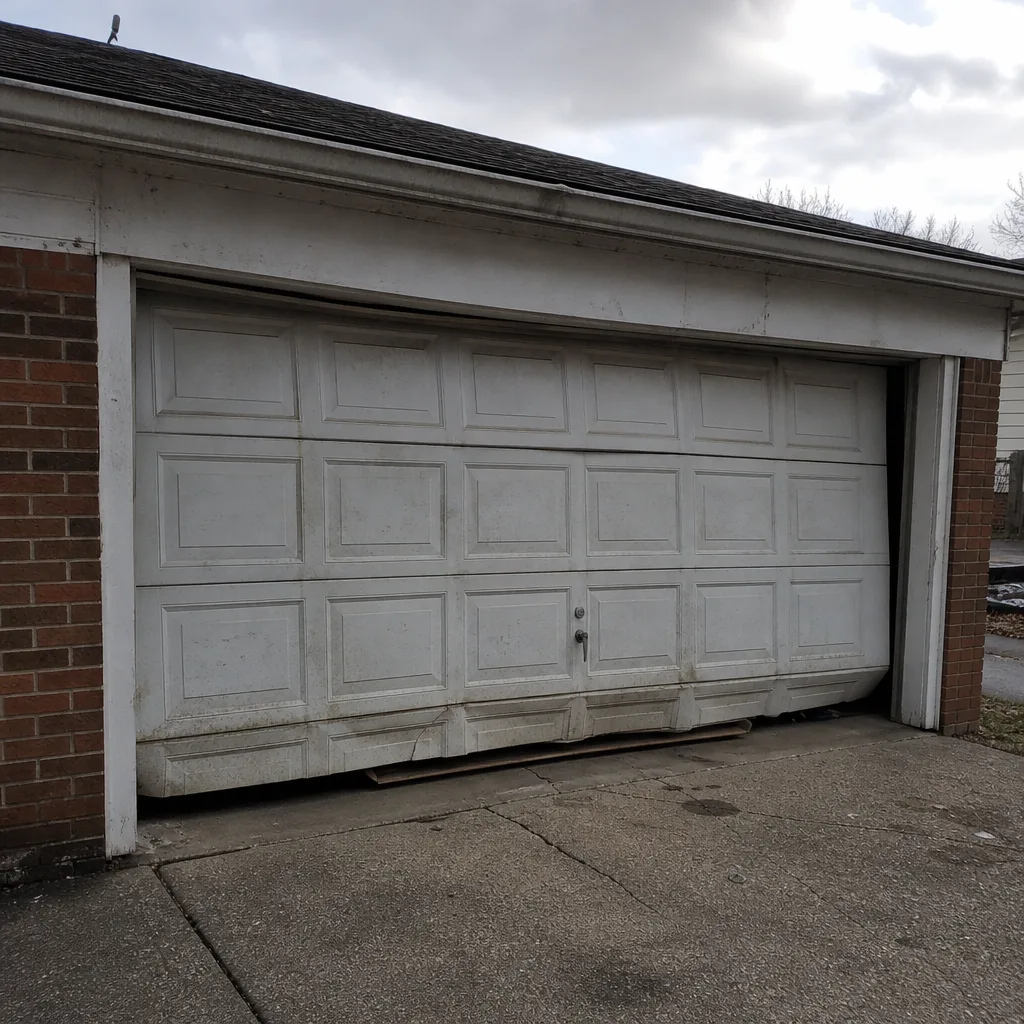 Before
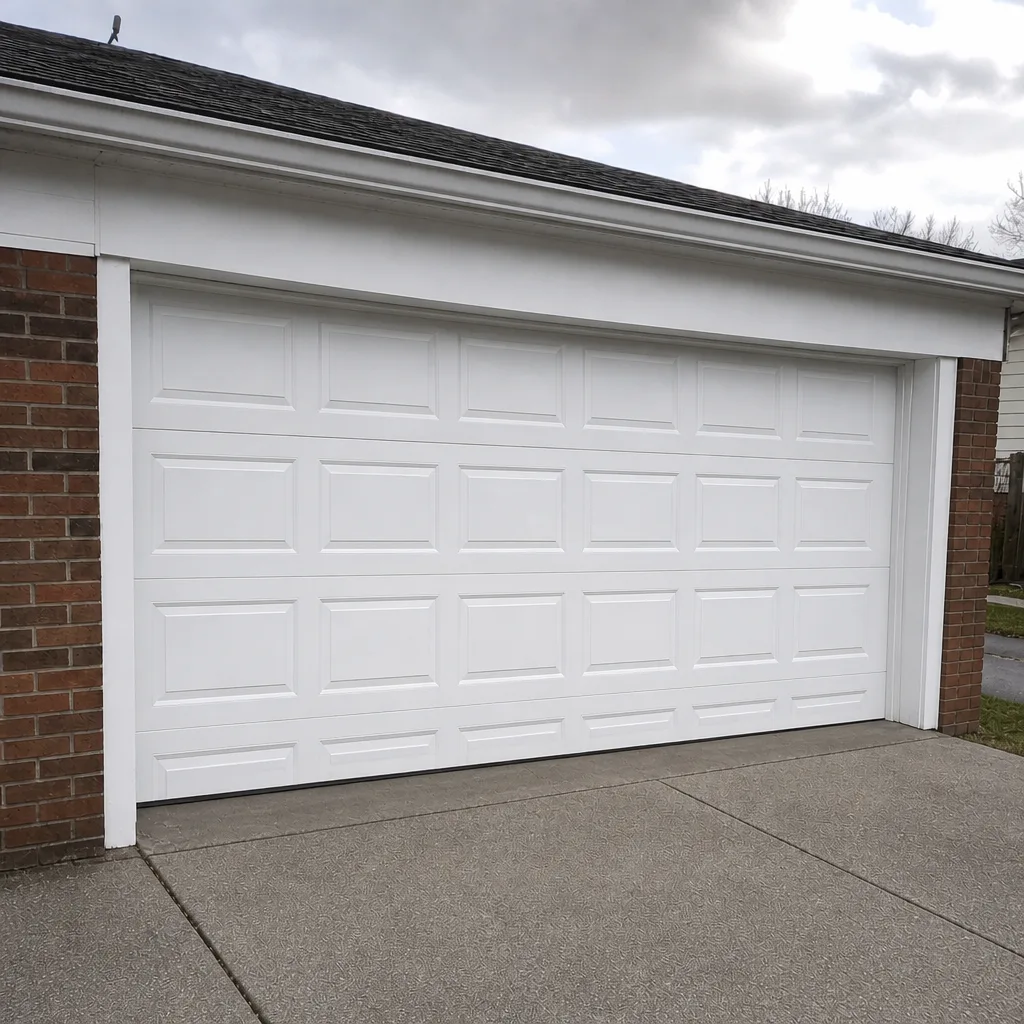 After
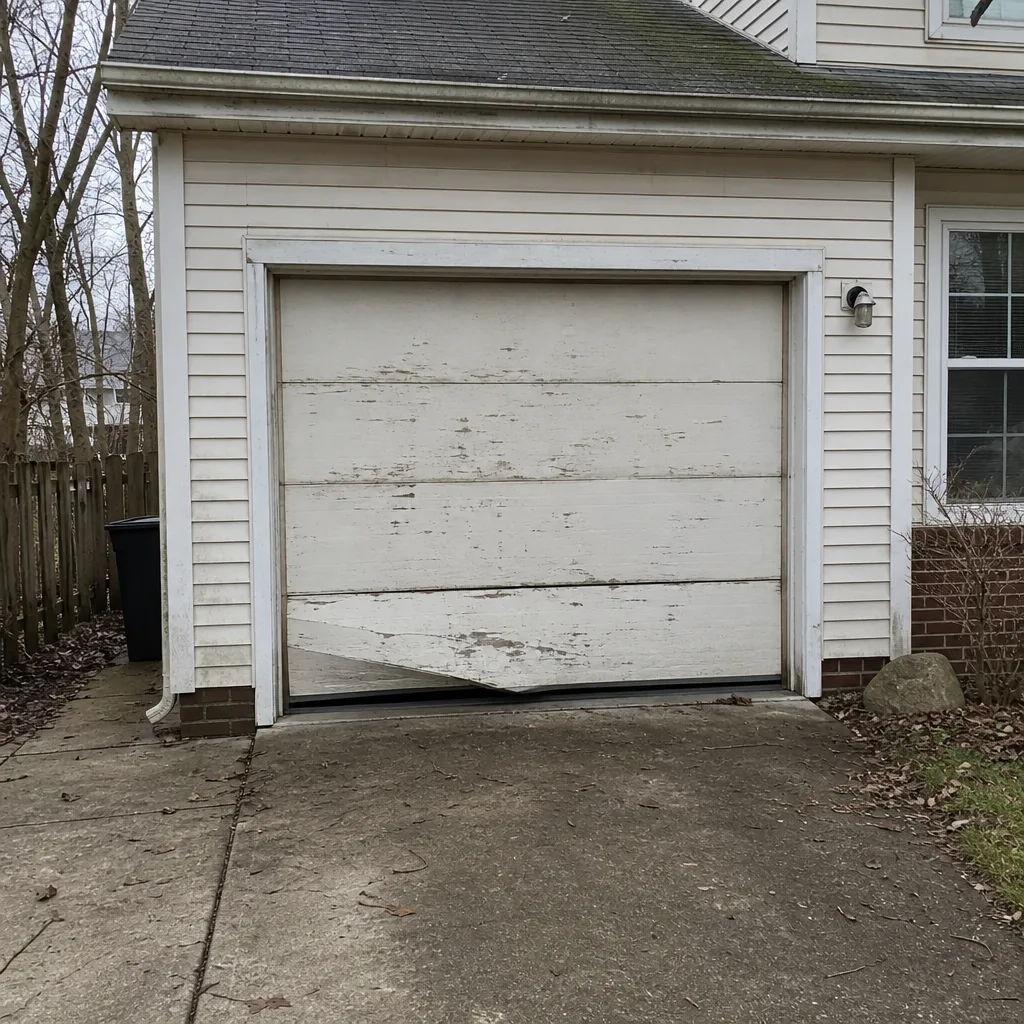 Before
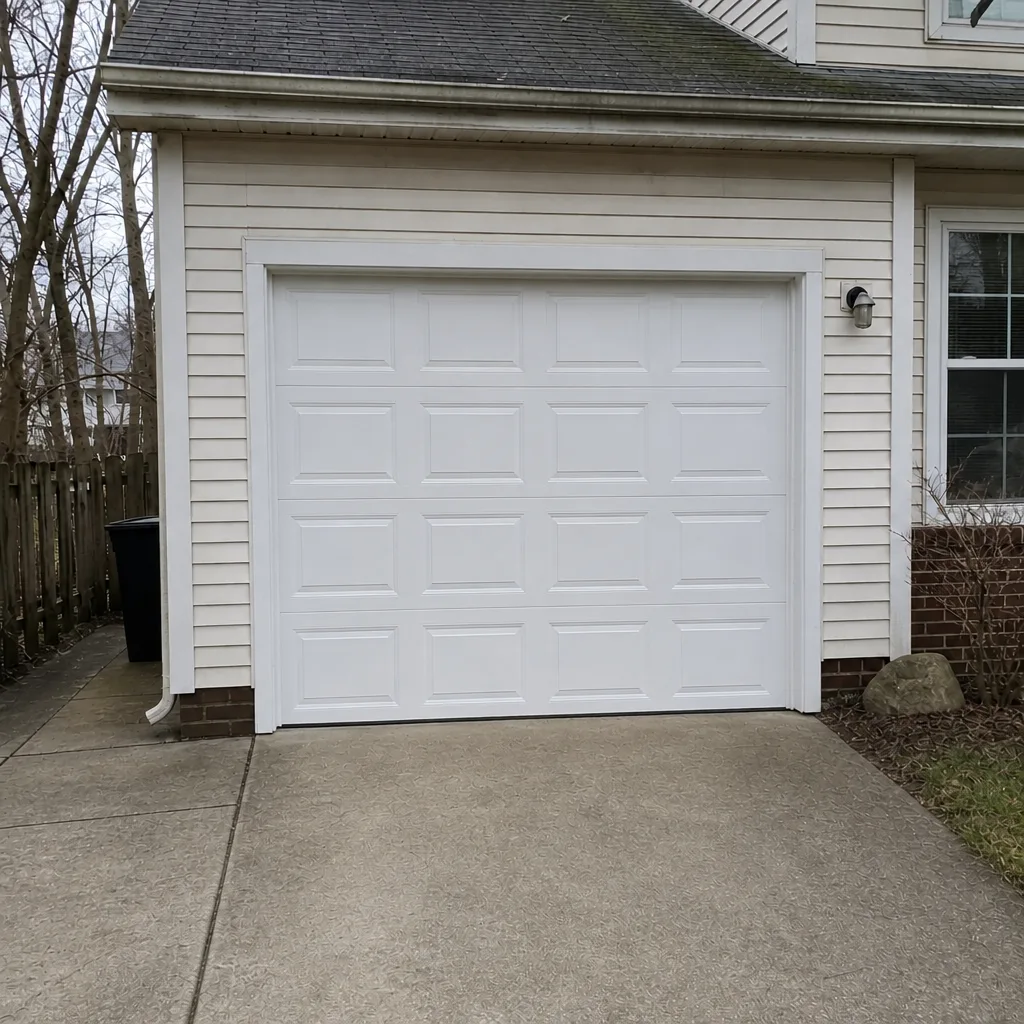 After
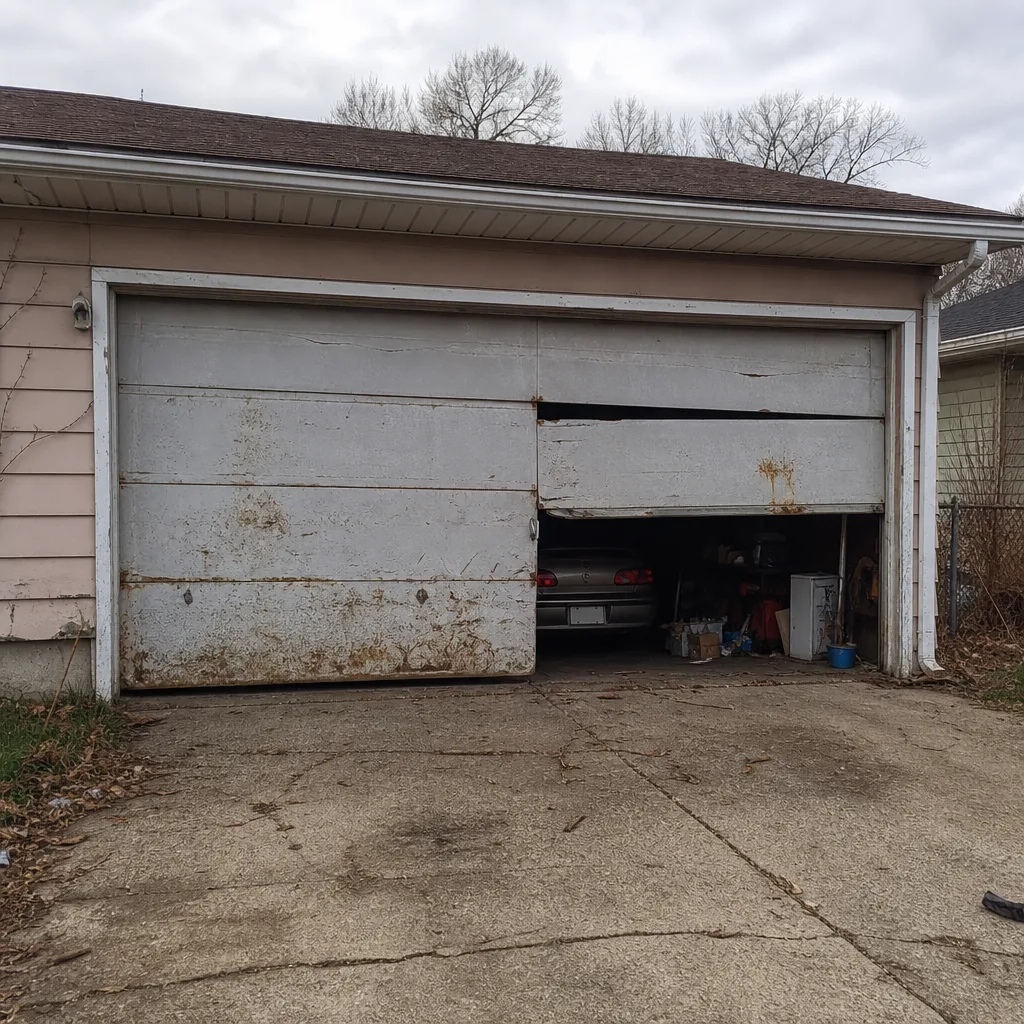 Before
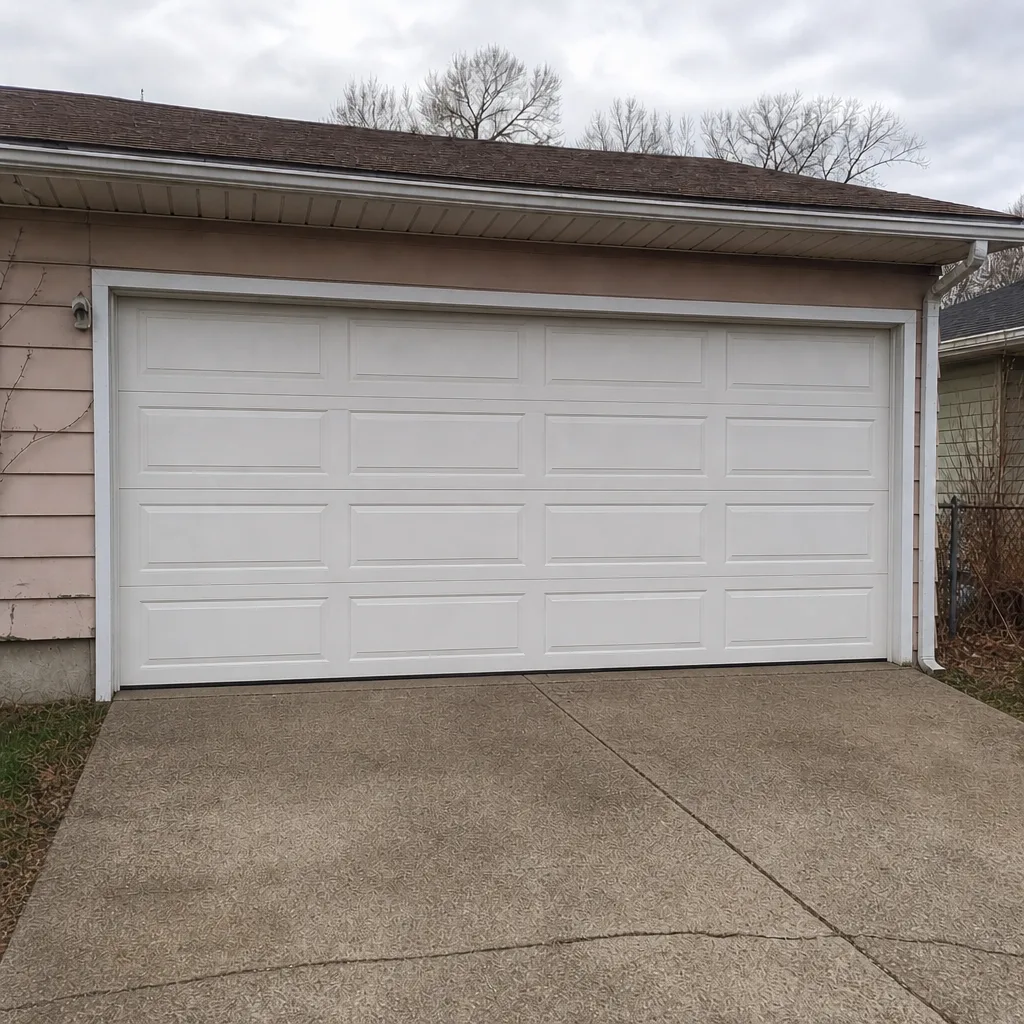 After
When to Call a Professional
Some warning signs can wait for a scheduled appointment. Others can’t, and it’s worth being clear on the difference. Call immediately if you find a cracked or scored winding cone, if the door won’t stay up at all on the balance test, if the door hangs visibly crooked in its tracks, or if a spring has already broken and left the door inoperable. On the other side, a grinding noise, a squeal, remote lag, or a rust pattern on a coil that isn’t gapping is a call to schedule rather than an emergency, and a free estimate is the right first step. Garage Door Repair Akron Pros offers free estimates in Akron. Call (833) 317-2051. We answer 24/7. Fast dispatch from 7am to 7pm, Sunday through Friday, and closed on Saturday; a call outside dispatch hours is booked into the next opening. The estimate is free, the price is set per job by the written estimate, and nothing gets started before you’ve agreed to it.
Frequently Asked Questions
The earliest warning is usually a change in the balance test: the door starts drifting down when you let go somewhere in the cycle where it used to hold. That’s followed within weeks or months by a noise that’s new or louder at one point in the cycle, and by rust freckles or gaps along a torsion spring coil. Catching any of these early means a scheduled repair instead of an emergency call. Call (833) 317-2051 for a free estimate if you’re seeing any of them.
Match the sound to the part: grinding usually comes from the opener’s gear or chain sprocket, squealing from a worn roller or torsion bearing, banging from the spring coil itself, and rattling from loose hinge bolts or rail brackets. The sound’s timing within the cycle is the second clue, since a noise that only happens at one point points at a specific track, coil, or gear location. Our technicians can tell you what a specific noise means for your brand of opener or door on a free estimate. Call (833) 317-2051.
Yes. Cold makes spring steel more brittle, and Akron’s freeze-thaw cycle runs the spring through wider temperature swings than a warmer climate does, so a fatigued spring here reaches its breaking point sooner than the calendar would suggest. Road salt and humidity also accelerate corrosion on the coil ends and winding cone. Booking a fall inspection is the practical response, and it’s the best time of year to have a spring evaluated in Akron. Call (833) 317-2051 to schedule a free estimate.
That behavior usually points to the opener, not the spring: a worn start capacitor, a drifting travel limit, a misaligned safety sensor, or a logic board starting to fail. The manual balance test separates the two: if the door holds its position on the balance test, the springs are carrying the load and the opener is the more likely culprit. If it drops, the spring is the first thing to check. A technician can sort out which one it is quickly, since every major brand has its own diagnostic pattern. Call (833) 317-2051 for a free estimate.
You can, but it usually costs more in the long run. A matched pair wears together, so the older spring tends to fail shortly after the new one goes in, and you end up paying for a second repair and a second service call. The standard practice is to replace both with a matched set so the door stays balanced. A technician will give you a written estimate for both options before any work starts. Call (833) 317-2051 to talk it through.
No. The written estimate sets the price, and nothing starts before you’ve agreed to it. The estimate itself is free and the range you’re quoted is what you pay for the agreed job, so an inspection that reads the door more closely than your own visual check won’t add surprise charges. If a technician finds a second problem while they’re there, they’ll tell you what it is and quote it separately rather than rolling it into the bill. Call (833) 317-2051 for a free estimate.
The Bottom Line
The warning signs that matter are the quiet ones: a door that drifts on a balance test, a new noise at one point in the cycle, rust or a gap along a torsion spring coil, an opener that hesitates or reverses without an obstruction. Each of these is a preview, and each gives you time to schedule a repair on your terms instead of waiting for a failure to set the schedule for you. Akron’s winters shorten that window, so a fall look at the springs and hardware is the highest-value maintenance you can do. Read the signs, keep your hands off the spring, and book the estimate. Garage Door Repair Akron Pros handles the full range, from a diagnosis to Garage Door Repair Akron Pros, with single-trade specialists on every job. Call (833) 317-2051. We answer 24/7. Fast dispatch from 7am to 7pm, Sunday through Friday.
Written by the team at Garage Door Repair Akron Pros.